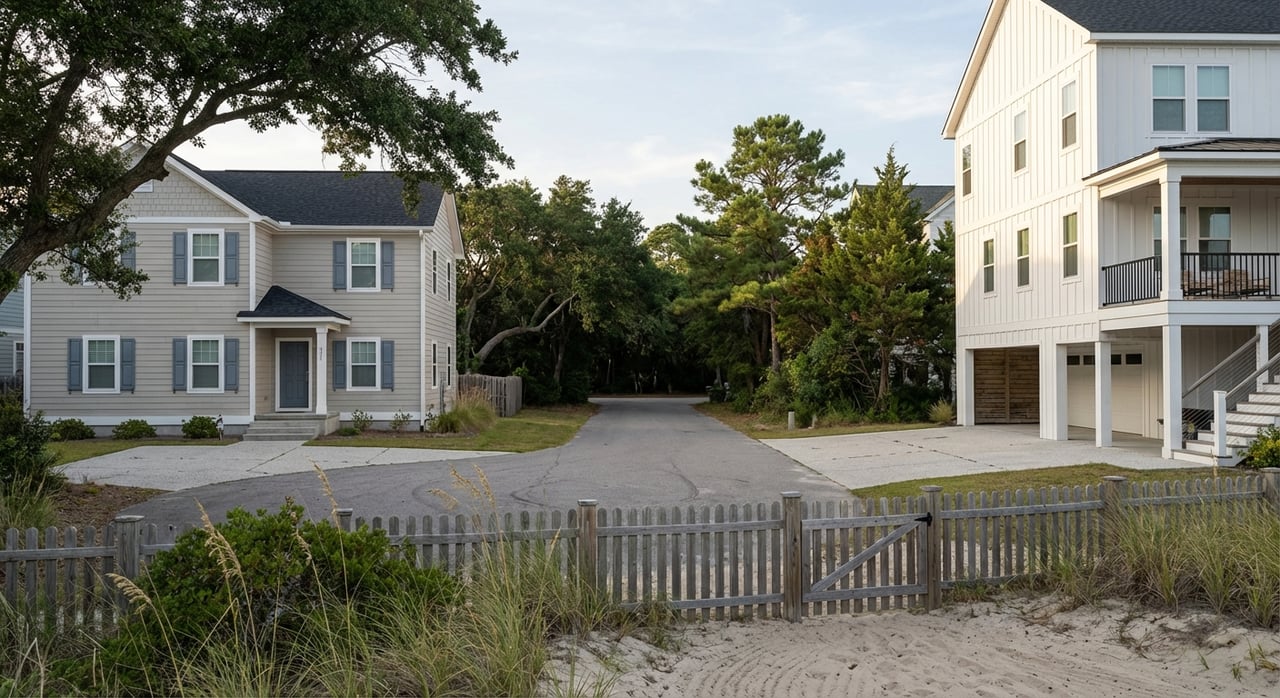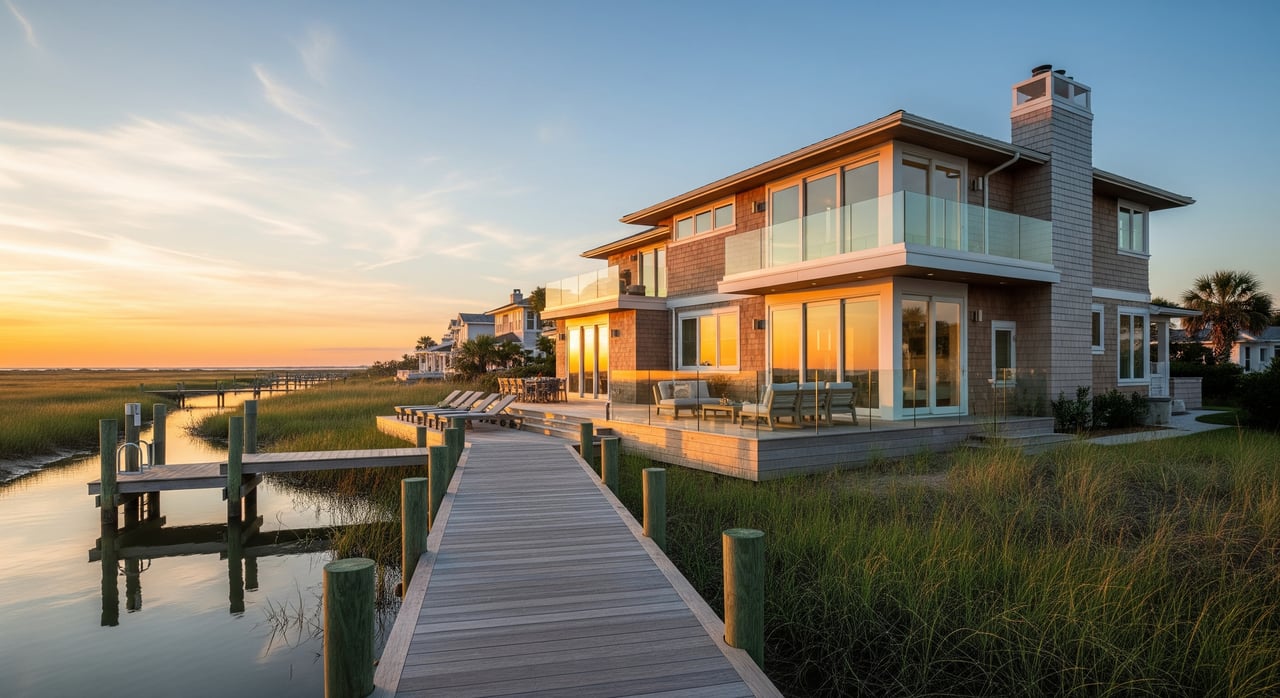
Thinking about buying a rental in Wishart Cove but not sure how to judge the numbers quickly? You are not alone. Many investors hear “cap rate” and wonder how it applies to a single-family home near Virginia Beach’s waterways. In this guide, you’ll learn what cap rate means, how to estimate income and expenses for a Wishart Cove rental, and how to stress-test your assumptions before you buy. Let’s dive in.
Cap rate, simply explained
Cap rate shows the annual income a property generates relative to its price. It helps you compare properties on an apples-to-apples basis, without considering financing.
- Cap rate = Net Operating Income (NOI) ÷ Purchase Price
- NOI is your income after normal operating expenses, before mortgage and taxes.
- Use cap rate to screen deals. Then layer in financing to see your cash-on-cash return.
Gather Wishart Cove comps
Start with recent, nearby single-family rental comps so your estimates reflect this micro-market.
- Sales comps for price: MLS data, public records via the City of Virginia Beach assessor or Commissioner of the Revenue, and local agent market reports.
- Rent comps for income: active rental listings and input from local property managers. Exclude short-term or furnished listings if you plan a long-term lease.
- Match property type and features: similar beds, baths, square footage, and condition. In Wishart Cove, proximity to waterways and marsh views can influence both rent and value.
Capture these data points for each comp:
- Beds, baths, square footage, year built, condition, lot size, and any garage or water access.
- Recent sold price and date.
- Asking or achieved rent and any downtime between tenants, if available.
- Annual property taxes, HOA dues, estimated insurance, and any utilities paid by the owner.
Estimate income and expenses
To get from rent to NOI, move through these steps.
Income terms to know
- Gross Scheduled Income (GSI): total rent if the home is 100% occupied.
- Vacancy and credit loss: a realistic allowance for downtime and nonpayment.
- Effective Gross Income (EGI): GSI minus vacancy, plus any other income.
Typical operating expenses
These reduce EGI to arrive at NOI. Your exact mix depends on the home and your management plan.
- Property taxes
- Insurance (landlord policy); flood and wind coverage may be needed in coastal areas
- Property management fees if you hire a manager (often 6 to 10% of collected rent)
- Maintenance and repairs, including turnover costs
- Capital reserves for big items like roof or HVAC
- HOA dues, if applicable
- Any owner-paid utilities and leasing/marketing costs
Local considerations in Wishart Cove
- Flood exposure: Homes near waterways may require flood insurance and can carry higher premiums.
- Wind and storm risk: Coastal storms can affect coverage and deductibles.
- Seasonal dynamics: Military moves and seasonal demand can influence vacancy timing.
- Local regulations: Confirm current rental rules and landlord-tenant requirements for Virginia and Virginia Beach.
Hypothetical example: Wishart Cove single-family
Numbers below are illustrative only to show the math. Use real local comps before making decisions.
- Purchase price: $350,000
- Market rent: $2,400 per month = $28,800 per year
- Vacancy allowance: 6% of rent = $1,728
- EGI: $28,800 − $1,728 = $27,072
Estimated annual operating expenses:
- Property taxes: $3,500
- Insurance: $1,800
- Management fee (8% of collected rent): ≈ $2,166
- Maintenance and repairs (8% of EGI): ≈ $2,166
- Capital reserve (5% of EGI): ≈ $1,354
- Total operating expenses: ≈ $10,202
NOI and cap rate:
- NOI = EGI − Operating expenses = $27,072 − $10,202 = $16,870
- Cap rate = NOI ÷ Price = $16,870 ÷ $350,000 ≈ 4.82%
A quick cash-on-cash check with financing:
- Down payment: 20% = $70,000
- Loan: 80% at an example 6.5% fixed, 30 years
- Approximate annual principal and interest: ≈ $20,147
- Annual cash flow after debt service = NOI − Debt service ≈ $16,870 − $20,147 = −$3,277
- Cash-on-cash ≈ −$3,277 ÷ $70,000 ≈ −4.68%
What this tells you: the unleveraged cap rate is modest, and today’s rates can push cash flow negative. That does not mean the property is a bad fit. It means you should sharpen rents and expenses, evaluate financing options, and plan reserves.
Quick formula recap
- Cap rate = NOI ÷ Purchase Price
- NOI = (Annual Rent × (1 − Vacancy Rate)) + Other Income − Operating Expenses
- Cash-on-cash = (NOI − Annual Debt Service) ÷ Cash Invested
Stress-test your assumptions
Before you buy, change one variable at a time and see how the numbers move. The quick scenarios below start from the example above.
| Scenario | NOI | Cap rate | Est. annual cash flow |
|---|---|---|---|
| Base case | $16,870 | 4.82% | −$3,277 |
| Rent −5% | $15,516 | 4.43% | −$4,631 |
| Vacancy 10% | $15,718 | 4.49% | −$4,429 |
| Operating expenses +10% | $15,850 | 4.53% | −$4,297 |
| Insurance +50% | $15,970 | 4.56% | −$4,177 |
Tips for a solid stress test:
- Run rent at −10%, −5%, and +5%.
- Test vacancy at 3%, 6%, and 10 to 12%.
- Add 10 to 20% to operating expenses to reflect rising insurance and maintenance.
- Annualize a big-ticket item like a roof to build a realistic capital reserve.
- For cash-on-cash, test interest rates at +0.5% to +2.0% and recalc debt service.
What is a “good” cap rate here?
Cap rates vary by neighborhood, property quality, and risk. In coastal or lower-risk areas that attract strong buyer demand, cap rates often run lower because prices are higher relative to rent. Properties with more perceived risk or fewer amenities can show higher cap rates. Use recent Wishart Cove comps and current expenses to set your target, then compare several homes on the same basis.
How to build your Wishart Cove underwriting file
Use this quick checklist as you evaluate a property:
- Pull 3 to 6 recent single-family sales within 0.5 to 1 mile and note price, size, and condition.
- Gather 3 to 6 nearby long-term rental listings that match beds, baths, and condition.
- Confirm the current annual property tax from city records for a similar home.
- Get insurance estimates, including flood and wind coverage if applicable.
- Contact a local property manager for fee ranges and realistic vacancy expectations.
- Map flood zones and review any rental registration steps for Virginia Beach.
- Plug the numbers into the formulas above and run stress tests.
Work with a hyper-local advisor
You do not have to guess. A seasoned local agent can help you find true comparable sales and rental rates, flag flood or insurance considerations, and connect you with trusted property managers and lenders. If you are weighing appreciation potential, cash flow, or a 1031 timeline, it helps to have neighborhood-level guidance tailored to Wishart Cove.
Ready to evaluate a specific property or build a short list of rental-ready homes? Reach out to Laura Rowe for a focused consultation, neighborhood comps, and an investor-friendly game plan. Want to understand your current home’s potential as a rental or sale? Request Your Free Home Valuation.
FAQs
What does cap rate mean for a single-family rental?
- Cap rate is the unleveraged annual return a property generates, calculated as NOI divided by purchase price. It helps you compare properties without considering financing.
How do I estimate rent for a Wishart Cove home?
- Use several nearby long-term rental listings, talk with local property managers, and adjust for beds, baths, condition, and waterfront proximity.
Which expenses should I include when calculating NOI?
- Include property taxes, insurance, management, maintenance, capital reserves, HOA dues, and any owner-paid utilities or leasing costs. Exclude mortgage and income taxes.
How does flood risk affect a Wishart Cove rental’s numbers?
- Potential flood insurance and higher premiums increase operating expenses and can affect demand, which reduces NOI and the effective cap rate.
Should I rely on cap rate alone to decide on a purchase?
- No. Use cap rate to screen. Then model cash-on-cash after debt service, test your assumptions for rent and expenses, and factor in risk and long-term goals.